
Starting an online business in 2026 is no longer about just “having a website.” It is about the invisible backbone of your brand: your dropshipping supplier. If you are a beginner asking, “What is a dropshipping supplier?” you aren’t just looking for a definition; you are looking for a business partner.
In this comprehensive guide, we will break down the mechanics of the modern supply chain, the different categories of partners you can choose, and the advanced strategies used by top-tier e-commerce brands to dominate the market.
What Is a Dropshipping Supplier in the Modern Era?
At its simplest, a dropshipping supplier is a third-party entity—usually a manufacturer or a wholesaler—that handles the storage, packaging, and shipping of products directly to your end customer.
However, in 2026, the definition has evolved. A modern dropshipping supplier is also a technology partner. They provide real-time data feeds, automated inventory syncing, and often, AI-driven logistics that ensure a package gets from a warehouse in Germany or the US to a customer’s door in under 3 days.
When you use an agent, you are essentially “renting” their infrastructure. You don’t own the warehouse, you don’t pay the staff who pack the boxes, and you don’t deal with the post office. Your job is to be the face of the brand, while the dropshipping supplier is the engine under the hood.
How the Dropshipping Supplier Relationship Works
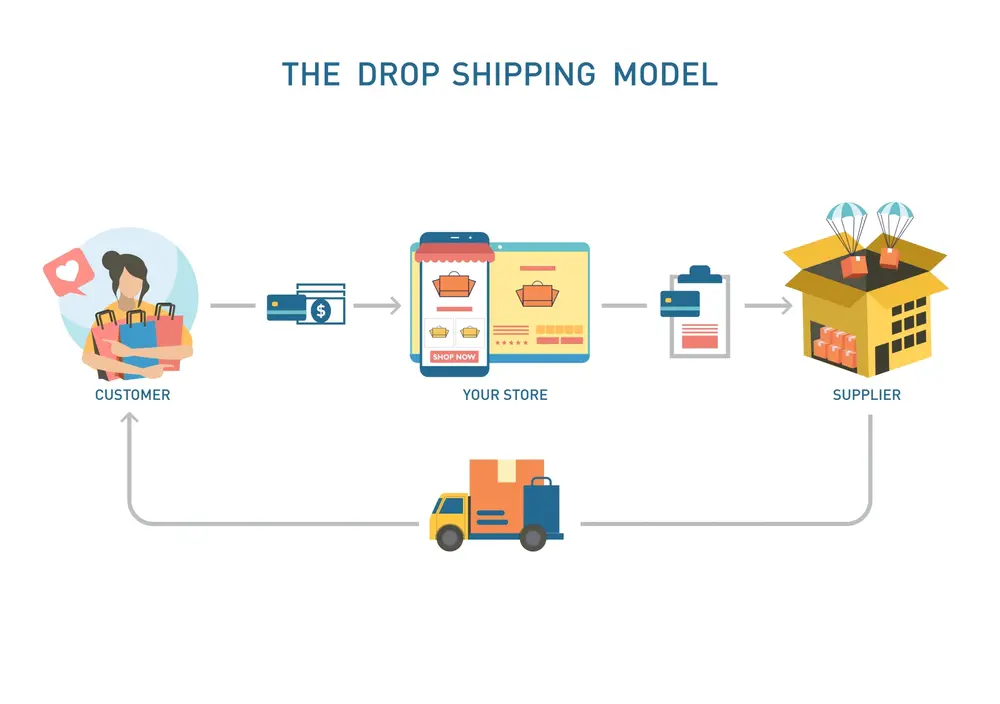
The workflow between a retailer and a dropshipping supplier follows a specific, four-step cycle:
Product Listing: You find a product from your contact supplier and list it on your store at a markup (e.g., you buy for $20, sell for $45).
The Customer Order: A customer buys the item from your website. You receive the $45 immediately.
The Fulfillment Trigger: You (or your automated software) send the order details and the wholesale cost ($20) to your dropshipping supplier.
Blind Shipping: The agent ships the item. Crucially, they use “blind shipping,” meaning their name isn’t on the box—yours is.
The Critical Importance of Your Dropshipping Supplier
In traditional retail, if a product is bad, you know it because it’s sitting in your garage. In dropshipping, you might never touch the product. This means your supplier is the gatekeeper of your reputation.
If your agent sends a broken item, the customer blames you. If the agent takes three weeks to ship, the customer leaves a 1-star review on your page. This is why finding reliable dropshipping suppliers is the single most important task for a beginner.
Strategic Benefits of a Professional Dropshipping Supplier
Low Capital Risk: Because the supplier holds the stock, you don’t have to invest thousands in inventory that might not sell.
Scalability: A high-quality supplier can handle 1 order a day or 1,000 orders a day without you needing to hire more staff.
Global Reach: By choosing a dropshipping supplier with multiple warehouses, you can sell to international markets with local shipping speeds.
Different Types of Dropshipping Supplier Entities
Not all partners are created equal. Depending on your niche and budget, you will encounter three main types of dropshipping supplier options:
1. Manufacturers
These are the people who actually make the goods. Working with a manufacturer as your supplier gives you the highest profit margins because there is no middleman. However, they often have “MOQs” (Minimum Order Quantities).
2. Wholesalers and Distributors
These companies buy in bulk from manufacturers and then act as a supplier for smaller retailers. They usually have a massive variety of products but slightly lower margins than manufacturers.
3. Dropshipping Platforms and Marketplaces
For beginners, this is the most common supplier entry point. Platforms like AliExpress, Spocket, or CJ Dropshipping act as a bridge, connecting you to thousands of individual dropshipping supplier accounts in one dashboard.
How to Find Your Perfect Dropshipping Supplier
In 2026, the “old way” of searching (just looking at the first page of Google) is often a trap. Many of the best supplier companies have terrible websites because they focus on logistics rather than marketing.
Using Verified Directories
Instead of random searching, professional sellers use a dropshipping supplier directory. These are curated lists where every company has been “vetted” for quality and legal standing. This is a key step in how to find reliable dropshipping suppliers for a long-term brand.
The "Local Warehouse" Advantage
The biggest trend in 2026 is domestic fulfillment. Customers no longer want to wait 15 days for a package from overseas. You should look for an agent that specifically advertises “US Warehouse” or dropshipping suppliers with European warehouses. This is a major advantage of local suppliers over cheaper international alternatives.
How to Verify a Dropshipping Supplier Before You Sell
One of the most common “rookie mistakes” is trusting a supplier without testing them. Before you send a single visitor to your store, you must verify dropshipping suppliers using these three steps:
Order a Sample: You must see the packaging and feel the quality.
Test Communication: Email the supplier with a technical question at 2:00 PM on a Tuesday. If they don’t reply within 24 hours, they won’t help you when a customer is angry.
Check the Return Policy: A “no returns” policy is a massive red flag. A legitimate supplier will always stand behind their products.
Moving Beyond the Basics: Private Agents
Once your store starts doing more than 10 orders a day, a standard dropshipping supplier marketplace might become too expensive or slow. This is where the role of private dropshipping agents becomes vital.
A private agent is a dedicated person who acts as your personal dropshipping supplier. They source products directly from factories, negotiate better prices, and provide custom branding (like putting your logo on the box). This is the secret to scaling your e-commerce business from a side hustle to a multi-million dollar brand.
How Shipping and Logistics Work in 2026
Modern supplier logistics involve complex data syncing. In 2026, you shouldn’t be manually entering addresses. Your store should talk directly to the supplier’s system. Understanding how shipping and logistics work in dropshipping is essential for maintaining your profit margins, as shipping costs can often be higher than the product cost itself.
In 2026, the “Wild West” of international shipping has ended. Governments have caught up with the e-commerce boom, creating a new landscape of rules. To succeed, your fulfillment partner must be an expert in these three pillars: Tariff Reform, Green Certification, and Regionalized Hubs.
The End of the "De Minimis" Era (Customs Reform)
For a decade, the “under $800” (US) and “under €150” (EU) rules allowed a wholesale distributor to ship small parcels duty-free. As of early 2026, this has fundamentally changed.
The EU Customs “Earthquake”: The European Union has officially removed the €150 customs duty exemption. Now, every single package entering the EU—regardless of its 5-euro value—is subject to a €3 flat handling fee plus specific product duties. If your sourcing partner doesn’t use the IOSS (Import One-Stop Shop) system, your customer will be hit with “hidden fees” at the door, killing your brand reputation.
US Section 321 Stricter Enforcement: While the US threshold remains higher than the EU, 2026 has seen aggressive “data-first” mandates. Your shipping provider must now provide advanced electronic manifests before the plane even lands.
Pro Tip: To remain competitive, switch your fulfillment strategy to a “Landed Cost” model. This means you pay the duties upfront so your customer has a “no-surprise” delivery experience.
Green Logistics: Sustainability as a Ranking Signal
By 2026, “Eco-friendly” is no longer a marketing buzzword; it is a legal requirement in many jurisdictions.
Carbon Reporting (Scope 3 Emissions): Large platforms like Amazon and Shopify now require sellers to report the carbon footprint of their shipping. High-tier supplier companies now provide “Carbon Dashboards” showing the exact grams of $CO_2$ emitted per parcel.
The “Last-Mile” Electrification: In 2026, major cities (London, Paris, New York) have established “Zero-Emission Zones.” Your local delivery partner must use electric vans or cargo bikes to reach these customers. If your wholesale vendor only uses traditional diesel fleets, they may be banned from delivering to high-value urban areas.
Packaging Circularity: Plastic mailers are being phased out. Serious order fulfillment centers now use “Mushroom packaging,” cornstarch peanuts, or reusable “loop” boxes that the customer can return.
The Rise of Eastern Europe and Mexico as Logistics Gateways
The 2026 trade map has shifted. While China remains the factory of the world, the distribution hubs have moved closer to the consumer to avoid port congestion.
Poland and Romania: These have become the “Logistics Engine” of Europe. By using a fulfillment partner with a warehouse in Warsaw, you can reach Berlin, Prague, and Vienna in under 24 hours.
The Mexico “Near-Shoring” Boom: For US-based stores, many are ditching direct-from-China routes. Instead, they use a sourcing agent who moves bulk stock into Mexican bonded warehouses. The goods then enter the US via ground transport, bypassing the massive port delays in Long Beach and Savannah.
The Economic Impact of Your Dropshipping Supplier Choice
When calculating your “Cost of Goods Sold” (COGS), the supplier is your biggest expense. However, a cheap agent often hides costs in other areas. In 2026, e-commerce success is measured by “Customer Lifetime Value” (CLV). If your supplier provides a poor unboxing experience, your CLV drops to zero because customers never return.
Understanding Tier 1 vs. Tier 2 Dropshipping Supplier Quality
Tier 1: These are premium partners who offer “Value-Added Services” (VAS). They don’t just ship; they offer custom branding and packaging, quality inspections, and real-time tracking.
Tier 2: These are volume-based partners. They are cheaper but often lack the infrastructure for scaling your e-commerce business.
Niche-Specific Dropshipping Supplier Strategies
The type of supplier you need changes based on what you sell.
Electronics: You need a supplier with a strong warranty and return policy. Technical defects are common, so choose partners with a robust understanding of how shipping and logistics work in dropshipping systems.
Fashion: Speed and “Instagram-ability” are key. You should prioritize UK dropshipping suppliers or those with European warehouses to keep up with fast-fashion trends.
Furniture/Heavy Goods: You cannot ship these from China. You must use local dropshipping suppliers who utilize LTL (Less Than Truckload) shipping to keep costs down.
The Technical Integration of a Dropshipping Supplier
In 2026, manual work is the enemy of profit. Your supplier must integrate with your tech stack.
API vs. CSV vs. Manual Ordering
API Integration: This is the gold standard. When a sale happens, your store “talks” to the supplier via an API, and the order is placed instantly. This is why many look for the best dropshipping suppliers for Shopify.
CSV/Excel Uploads: Good for mid-sized stores. You export your daily orders and upload them to the dropshipping supplier dashboard.
Manual Ordering: Only sustainable for very low volume. Avoid this if you plan on scaling your e-commerce business.
As you scale, the method you use to sync with your logistics partner will determine your success. Use the table below to decide on your technical setup:
| Feature | Manual / CSV Uploads | API-Based Automation |
| Inventory Sync | Once daily (High risk of overselling) | Real-time (Syncs every 15 mins) |
| Order Processing | Manual copy-paste (Slow) | Instant & Automatic |
| Tracking Numbers | Manually emailed to you | Auto-pushed to the customer |
| Error Rate | 8% – 10% (Human error) | < 0.5% (System-driven) |
| Scalability | Max 10 orders/day | Unlimited |
Negotiating with a Dropshipping Supplier for Better Margins
Most beginners don’t realize that the supplier prices are rarely fixed. Once you have consistent sales (even just 5-10 per day), you have leverage.
How to Ask for a Discount
Don’t just ask for “cheap prices.” Approach your supplier with data: “I am currently doing 50 orders a month of SKU-123. If I commit to 200 orders, can we reduce the unit cost by 10%?” This professional approach is part of how to find reliable dropshipping suppliers who view you as a partner, not just a customer.
The Future: AI and the Dropshipping Supplier
By late 2026, we expect a dropshipping supplier to use “Predictive Inventory.” This means they use AI to see trends in your store and move stock to the warehouse closest to your customers before they even order. Choosing a tech-forward supplier now ensures you aren’t left behind.
Common Dropshipping Supplier Scams and How to Avoid Them
As the industry grows, so do the risks. Part of learning how to find reliable suppliers is knowing who to avoid. Fraudulent middlemen often pose as a supplier but only exist to steal your data or provide counterfeit goods.
The Monthly “Access” Fee: Most legitimate supplier companies do not charge you a monthly fee just to do business with them. If a supplier asks for a “membership fee” before you even see their products, they are likely a directory, not a true dropshipping supplier.
The Lack of a Physical Address: Always use Google Maps to check the address of your supplier. If their “warehouse” is a residential house or a P.O. box, they are likely a middleman with no control over inventory.
Refusal to Provide Samples: If a supplier makes excuses about why they cannot send a single sample, it usually means they don’t have the stock on hand.
Legal and Tax Essentials When Working with a Dropshipping Supplier
You cannot ignore the legal side of the supplier relationship. In 2026, tax compliance is automated but still requires your oversight.
Sales Tax (Nexus): In the US, if your point of contact is in a specific state, you may have “Nexus” there. This is a key reason why US dropshipping suppliers with fast shipping require you to have a Resale Certificate.
VAT in the EU: If you use dropshipping suppliers with European warehouses, you must understand the Import One-Stop Shop (IOSS) rules to ensure your customers aren’t hit with unexpected customs fees.
Liability Agreements: Ensure your supplier agreement clearly states who is liable for safety issues. This is a critical part of how to verify dropshipping suppliers for high-risk niches like toys or beauty products.
Troubleshooting: What to Do When Your Dropshipping Supplier Fails
Even the best dropshipping suppliers for Shopify will occasionally make mistakes. Your success depends on your “Plan B.”
Out-of-Stock Crisis: Always have a secondary supplier listed for your best-selling items. If Supplier A runs out, you can immediately flip the order to Supplier B without the customer knowing.
The “Ghost” Tracking Number: If a supplier provides a tracking number that doesn’t update for 5 days, they are likely “pre-printing” labels to hide slow processing times. This is a sign you need to switch to a private dropshipping agent for better transparency.
Mass Returns: If you see a spike in returns for a specific SKU, stop your ads immediately. Contact your dropshipping supplier and demand a video of the current batch of inventory.
Verified Dropshipping Supplier Examples for 2026
When you are ready to stop researching and start selling, these are the heavy hitters of the industry. Each supplier listed below has been vetted for reliability, automation, and speed.
1. Spocket (Best for US/EU Quality)
Spocket is the gold standard for sellers targeting Western markets. Unlike general marketplaces, 80% of their supplier base is located in the United States or Europe.
Why they are serious: They strictly vet their partners, ensuring that only high-quality products enter the marketplace. This is the best choice for those who prioritize the advantages of local suppliers.
Key Feature: They offer “Branded Invoicing,” meaning your logo appears on the packing slip, reinforcing your brand identity.
2. Zendrop (Best for Beginners & Scale)
Zendrop was built by dropshippers, for dropshippers. It functions as a massive marketplace but acts like a private dropshipping agent.
Why they are serious: They offer “Zendrop Select” products that they have physically verified in their own warehouses. This eliminates the “surprise” of poor quality.
Key Feature: Their “Auto-Fulfillment” feature is among the fastest in the industry, making them one of the best dropshipping suppliers for Shopify.
3. CJ Dropshipping (The All-In-One Powerhouse)
If you want a hybrid model—sourcing from China but shipping from the West—CJ Dropshipping is the answer. They have warehouses in the US, Germany, and the UK.
Why they are serious: They offer a free sourcing service. If you find a product on a random site, you can ask them to find it and act as your supplier.
Key Feature: They provide “Print-on-Demand” (POD) and custom packaging services under one roof.
4. Syncee (Best for B2B & Niche Brands)
Syncee connects you with millions of products from verified supplier partners globally. It is particularly strong for those who want to sell “real” brands rather than generic white-label items.
Why they are serious: They focus on long-term B2B relationships. Their DataFeed Manager allows you to sync with almost any supplier, even if they don’t have a Shopify app.
Key Feature: Excellent filters for finding dropshipping suppliers with European warehouses.
5. Doba (Best for Large Catalogs)
Doba is a high-end marketplace that aggregates over 165 dropshipping supplier companies into one platform.
Why they are serious: They provide advanced “Inventory Alerts.” If your supplier is running low on a specific SKU, Doba notifies you automatically so you don’t sell out-of-stock items.
Key Feature: Powerful integration with TikTok Shop, which is a major trend for scaling your e-commerce business in 2026.
How to Contact These Suppliers Professionaly
When you reach out to a supplier, remember that they are also vetting you. Use a professional business email (name@yourbrand.com) rather than a Gmail account. Ask specific questions about how shipping and logistics work in dropshipping protocols and their daily order capacity. This shows you are a serious merchant and helps you verify dropshipping suppliers effectively.
The Communication Protocol with Your Dropshipping Supplier
In 2026, a supplier is not just a vendor; they are your remote logistics team. Poor communication is the leading cause of store failure. To stay ahead, establish a “Status Check” routine.
Daily Automation: Ensure your best dropshipping suppliers for Shopify provide automated tracking updates via API.
Weekly Quality Sync: Ask for a quick report on any returned items or manufacturing defects.
Quarterly Review: Discuss volume discounts as you move toward scaling your e-commerce business.
Transitioning to Private Labels
Once your supplier helps you identify a “winning product,” the next step in 2026 is Private Labeling. This involves asking your dropshipping supplier to put your brand name on the physical product. This shift is crucial for building a brand that can eventually be sold for a high valuation.
Conclusion: Your Journey with a Dropshipping Supplier
Finding the right dropshipping supplier is the most significant hurdle a beginner will face. However, by shifting your focus from “finding the cheapest price” to “finding the most reliable partner,” you set your business up for long-term success.
Whether you start with US dropshipping suppliers with fast shipping or leverage the role of private dropshipping agents, the core of your business remains the same: providing value to your customer through a seamless fulfillment experience.
Remember, your supplier is the foundation. Build it on solid ground, use the 2026 strategies we’ve discussed, and you will see your store flourish in the competitive e-commerce landscape.
For more advanced tactics, return to our article How to Find Dropshipping Suppliers to continue your education.
FAQ
What is the average cost of a dropshipping supplier?
Most legitimate dropshipping supplier partners do not charge a monthly subscription. Instead, you pay the wholesale price of the item plus a “picking and packing” fee (usually $1–$5) and the cost of shipping. Be wary of any supplier that demands a large upfront “membership” fee.
How do I know if a dropshipping supplier is real or a scam?
To verify dropshipping suppliers, check for a physical warehouse address, real-time customer support, and a transparent return policy. A real supplier will also be willing to ship you a sample of their product to prove quality before you start scaling your e-commerce business.
Can I use multiple dropshipping suppliers at once?
Yes. Using multiple dropshipping supplier accounts is a common strategy to prevent “out-of-stock” issues. By diversifying your partners, you can also compare European vs Chinese dropshipping suppliers to see which offers better margins and delivery times for your specific audience.
Do dropshipping suppliers ship internationally?
Most do, but shipping costs vary wildly. It is often more efficient to use local dropshipping suppliers within the country you are targeting to avoid customs delays and high fees. If you are selling globally, consider a private dropshipping agent who can coordinate global logistics from a single hub.
Affiliate Disclaimer:
This post contains affiliate links. If you purchase through these links, we may earn a small commission — at no extra cost to you. This helps support our blog and allows us to keep creating helpful content. Thank you for being so supportive!
Read more:
- Best Dropshipping Suppliers in the USA (Fast & Reliable)
- Ultimate Guide to Dropshipping Suppliers (2026)
- Best Dropshipping Suppliers in Europe (Fast Shipping & No MOQ)
- Art of Where Review (2026): Print-on-Demand & Dropshipping?
- Best Dropshipping Suppliers 2026: The Ultimate Directory
- Sparkle In Pink vs Faire — Boutique Wholesale Comparison
- How to Start a Children’s Boutique Online (2026 Guide)
- Sparkle In Pink Wholesale and Dropshipping- 2026 Review
