Dropshipping is a modern, low-risk business model that allows anyone to sell products online without holding any inventory. It’s ideal for entrepreneurs, side hustlers, and beginners who want to start an online storewithout the high upfront costs of traditional retail.
In a traditional e-commerce setup, you buy products in bulk, store them in a warehouse, and ship them to customers. But in dropshipping, you only purchase the item after a customer places an order. Your supplier handles the storage, packaging, and shipping, and you focus on marketing and sales.
🔁How Dropshipping Works (in 4 Steps)
You create an online store with platforms like Shopify, WooCommerce, or BigCommerce.
You add products from a supplier to your store (images, prices, descriptions).
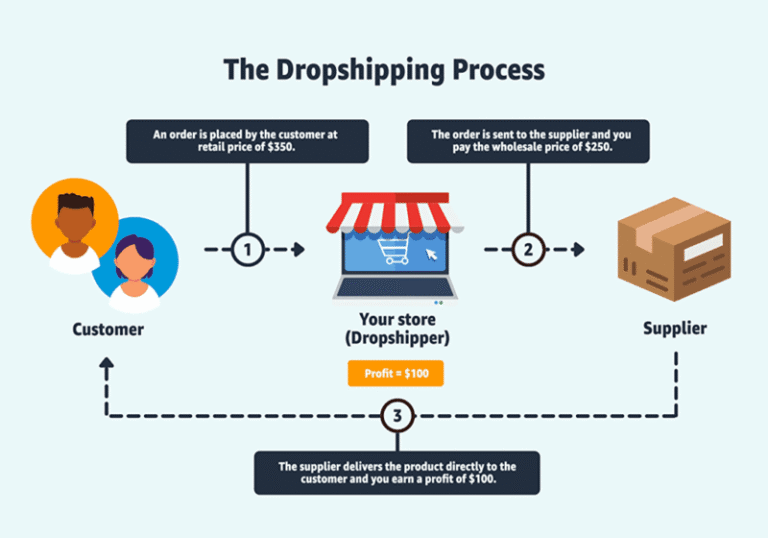
A customer places an order on your website and pays you the full retail price.
You forward the order to the supplier, who ships it directly to your customer.
You keep the profit margin between what the customer pays and what you pay the supplier.
💡Example:
You list a fashion bag on your store for $50
The supplier charges you $25 for the same bag
The customer places an order → You earn $25 profit
The supplier ships it directly to the customer
No inventory. No warehouse. Just you, your laptop, and a store.
🌍Why is Dropshipping So Popular?
Low Startup Costs: You don’t need to invest thousands in inventory.
No Storage Required: No need to rent a warehouse or stock products.
Wide Product Range: You can sell anything from fashion to gadgets.
Work From Anywhere: All you need is a laptop and Wi-Fi.
Easier to Scale: Add more products or test new niches without risk.
💼Who Is Dropshipping For?
New entrepreneurs
Stay-at-home parents
College students
Side hustlers
Content creators
Digital nomads
If you’re looking for low startup costs, flexibility, and the ability to sell products worldwide, dropshippingis a great option.
People who hate customer service (you’ll still need to handle returns and complaints)
Those unwilling to test, fail, and adapt
🔎What You’ll Learn in This article:
✅ How to choose your niche ✅ Which tools to use to launch your store ✅ Where to find reliable suppliers ✅ How to market your products ✅ Tips to avoid beginner mistakes ✅ And a curated list of 100 trusted suppliers to get started
📖Chapter 2: How Dropshipping Works – A Detailed Walkthrough
Now that you understand the basic concept of dropshipping, let’s break it down step by step so you can see exactly how the process flows from setup to sale.
🏪Step 1: Set Up Your Online Store
To start a dropshipping business, the first thing you need is a storefront — your digital shop window.
Choose one that fits your budget and skill level. Shopifyis often best for beginners due to its simplicity and built-in dropshipping app integrations.
📦Step 2: Choose & Import Products from a Supplier
Once your store is set up, you’ll need to add products. But here’s the beauty of dropshipping — you don’t own the products.
Instead, you connect your store with a dropshipping supplier or app (such as DSers, Spocket, or AliExpress) and import their products directly into your store.
Each listing includes:
Product photos
Descriptions
Price (which you can markup)
Shipping info
You can customize titles, descriptions, and pricing before publishing.
🛒Step 3: A Customer Places an Order
Now your store is live. You promote your products (more on that in Chapter 10), and someone places an order.
They pay the retail price on your website.
Example: The customer buys a watch for $40 on your site.
💼Step 4: You Forward the Order to Your Supplier
You now go to your supplier (either manually or through an automated app) and pay their price for the product.
Using the same example, the supplier charges you $18 for the watch. You keep the $22 profit margin.
📦Step 5: Supplier Ships the Product to Your Customer
Your supplier packages and ships the order directly to your customer, often with neutral or no branding, so it appears to have come from your store.
You don’t touch or see the product — it’s all handled by the supplier.
Shipping times depend on the supplier:
Local suppliers (USA, EU): 2–7 days
Overseas suppliers (China): 7–20 days or more (unless they use local warehouses)
💰Step 6: You Keep the Profit
You’ve made the sale, fulfilled the order, and your customer is happy, all without handling inventory or packing a single box.
You focus on:
Customer service
Running ads or content
Optimizing your website
Scaling your profits
That’s the power of the dropshipping model.
🧩Common Tools That Automate the Process
Here are tools that help automate your dropshipping business:
Product importing, price syncing, and auto-fulfillment
🔐Key Tip:
Start simple. Don’t overload your store with 100s of products. Pick 5–15 solid items to begin with. Focus on quality and conversion.
📖Chapter 3: Pros and Cons of Dropshipping – Is It Right for You?
Before diving deeper into your dropshipping journey, it’s important to weigh the advantages and disadvantages. Like any business model, dropshipping has its pros and cons — and understanding them will help you make smarter decisions.
Let’s break them down honestly.
✅Pros of Dropshipping
1. Low Startup Costs
You don’t need to buy inventory upfront. All you need is a domain, hosting, and a store builder(Shopify, WooCommerce, etc.). You can launch with under $100.
2. No Inventory Management
Forget warehouses, stock levels, and shipping logistics. Your supplier handles all of that.
3. Work from Anywhere
Since the business is online, you can run it from home, a café, or anywhere in the world. All you need is Wi-Fi and a laptop.
4. Scalable
With the right marketing and automation tools, you can scale fast, adding more products or launching new stores.
5. Wide Product Variety
You can test many products without commitment. Not selling well? Remove it. Find a winning product? Scale it.
6. Easy to Get Started
Platforms like Shopify, Wix, and WooCommerce make it easy to build a professional store — no coding required.
7. Test Before You Invest
Dropshipping allows you to test ideas or niches before investing in bulk inventory or private labeling.
❌Cons of Dropshipping
1. Lower Profit Margins
Because you’re not buying in bulk, your cost per item is higher than traditional wholesale — which reduces your margins.
2. Longer Shipping Times
If your supplier ships from overseas (especially China), customers may experience 10–30 day delivery times unless you use local warehouses.
3. Quality Control Risks
Since you don’t handle the product, you’re trusting suppliers with product quality and packaging. Poor quality can lead to returns and chargebacks.
4. Inventory Sync Issues
If a supplier runs out of stock, and your store still shows the item, you may disappoint customers.
5. High Competition
The low barrier to entry means lots of sellers compete for the same niches — you’ll need smart marketing to stand out.
6. Limited Branding
You have less control over packaging, inserts, and branding compared to traditional businesses unless you upgrade to custom services.
🎯Is Dropshipping Right for You?
Dropshipping is not a get-rich-quick scheme, but it’s an excellent starting point for:
Aspiring entrepreneurs on a tight budget
People looking for side income
Creatives who want to build a brand
Anyone with hustle and a willingness to learn digital marketing
It’s ideal if you’re okay with:
Learning how to market and sell online
Handling occasional customer support
Working with suppliers and tracking orders
Testing, failing, and optimizing to grow
If you want full control over your products and higher margins, you might eventually transition to private label or wholesale— but dropshipping is the perfect launchpad.
💬What You Should Know Before Starting
Be ready to test different products before you find a winner.
Don’t expect massive profits overnight — it takes time and tweaking.
Focus on branding, customer experience, and clear shipping info to reduce refunds.
Always order samples before scaling — see the quality for yourself.
📖Chapter 4: How to Start Your Dropshipping Business – Step-by-Step
If you’re ready to launch your own ecommerce business without inventory or upfront costs, this is the roadmap. Here’s a step-by-step plan that takes you from an idea to your first sale — even if you’ve never built a website before.
✅Step 1: Choose a Niche
Your niche is the category of products you’ll sell. Picking the right one is key.
🔍 Ask Yourself:
What products am I passionate about?
Is there a demand for this niche?
Can I target a specific audience (pet owners, fitness lovers, parents, etc.)?
Are there existing successful stores in this niche?
💡 Hot Niches in 2025:
Home & Kitchen gadgets
Pet accessories
Eco-friendly products
Wellness & skincare
Fitness gear
Fashion jewelry
Smart tech accessories
Tip: Use tools like Google Trends, TikTok, and Amazon Best Sellers to research trending products.
✅Step 2: Find a Reliable Supplier
Your supplier is your business partner. They handle product quality, stock levels, and shipping. Choose wisely.
Start with one or two channels and grow from there.
✅Step 9: Manage Orders & Support
When you get a sale:
Forward the order to your supplier (or use automation).
Monitor shipping and tracking info.
Email your customer updates and tracking.
Be ready to respond to questions or delays.
Tip: Use apps like Track123or AfterShipto give customers real-time tracking.
📋Quick Checklist:
✅ Choose your niche ✅ Pick your supplier ✅ Build your store ✅ Import 10–20 products ✅ Set up payments & policies ✅ Test everything ✅ Promote your store ✅ Handle orders professionally
📖Chapter 5: How to Choose Winning Products?
In dropshipping, your success depends heavily on the products you sell. You could have the most beautiful store, the best marketing strategy, and flawless customer service — but if your product doesn’t solve a problem or spark interest, you won’t get sales.
This chapter is your blueprint to picking winners.
🎯What Is a “Winning Product”?
A winning product is an item that:
Solves a clear problem or pain point
Has a strong visual appeal or novelty
It is not easily found in local stores
Has a healthy profit margin
Sells well online or is trending
It is simple to use and understand
Encourages impulse buys (especially on social media)
🔍1. Use Product Research Tools
These tools show you what’s trending, what competitors are selling, and what’s worth testing.
🛠 Best Free & Paid Tools:
Sell The Trend – Shows top-selling dropshipping products
Use Facebook Ads Library to search by product name
Use tools like Commerce Inspector or Koala Inspector to analyze Shopify stores
This helps you avoid oversaturated items and find products with proven demand but less competition.
🔎6. Read Product Reviews
If a product has positive reviews, that’s a good sign.
Check for:
Quality
Delivery time
Accuracy of the description
Photos from customers
Do this on AliExpress, Amazon, and your supplier’s site.
🌍7. Consider Local Shipping Options
Fast delivery is a huge advantage. Try to pick suppliers with US, UK, EU, or local warehouses, especially for:
Fashion
Gadgets
Household items
This builds trust and increases conversion rates.
💡Bonus Tip: Build a Product Funnel
Once you find a winner, offer:
Upsells – accessories, bundles, premium versions
Cross-sells – related items in the same niche
Subscriptions – consumables like skincare or pet supplies
This multiplies your profit per customer.
✅Recap: What Makes a Winning Product?
Criteria
Description
Problem-Solving
Fixes a common issue
Eye-Catching
Visually interesting for ads
Untapped or Viral
Trending but not overdone
High-Profit Margin
2x–3x markup possible
Positive Social Proof
Reviews, shares, engagement
Lightweight & Durable
Easy to ship and handle
Quick Shipping Option
Faster delivery = better conversion
📖Chapter 6: Branding Your Store for Long-Term Success
Many dropshipping beginnersfocus solely on finding products, but products come and go. If you want to build a real business, not just a quick hustle, you need one thing:
A powerful, trustworthy brand.
Branding builds trust, sets you apart from the competition, and turns one-time buyers into loyal customers. In this chapter, we’ll show you how to build a brand your audience will remember.
💼Why Branding Matters in Dropshipping
Anyone can sell the same products you’re selling. Your brand is what makes customers choose you over others.
Here’s what good branding does:
Creates an emotional connection
Builds credibility and trust
Makes your store memorable
Justifies higher prices
Increases customer loyalty
🎨1. Choose a Brand Name That Resonates
Your brand name should be:
Short and easy to spell
Relevant to your niche
Unique and available as a .com domain
Not too limiting (e.g., not “DogLeashesOnly” if you may expand)
Tip: Stick to 2–3 brand colors and use them consistently.
🛍3. Design a Beautiful, Trustworthy Store
Customers decide whether they trust your site in seconds. That’s why your homepage and product pages must feel clean and professional.
Must-Have Pages:
Home
Shop/Products
About Us
Contact
FAQs
Shipping & Returns Policy
Track Order
Design Tips:
Use high-quality images
Write clear product descriptions
Highlight customer reviews
Add trust badges (SSL, Payment Icons, etc.)
Ensure your site is mobile-friendly
💬4. Speak Your Audience’s Language
Your brand voice should feel familiar to your target customer.
Example:
A fitness brand: Energetic, motivational tone
A skincare brand: Calm, confident, elegant
A pet brand: Fun, friendly, playful
Be consistent across product pages, emails, ads, and packaging.
🧑🤝🧑5. Build Trust With Social Proof
The more proof you provide, the more comfortable people feel when making a purchase.
Add:
Product reviews with photos
Testimonials
UGC (user-generated content)
“As seen on” badges, if applicable
Social media feeds
If you don’t have reviews yet, incentivize early customers to leave one with discounts or freebies.
📲6. Create a Social Media Presence
Even if you’re not running paid ads yet, building a presence on social platforms helps build your brand.
Platforms to consider:
TikTok – Fastest-growing; perfect for short product demos
Instagram – Visual branding, influencers, and Reels
Pinterest – Great for decor, fashion, DIY
Facebook Page + Group – Community building
YouTube Shorts – Build trust with tutorials, reviews
Tip: Use tools like Canva or CapCut to create content easily.
🔁7. Consider Brandable Packaging (Later Stage)
Once you start getting consistent sales, level up with:
Custom packaging
Branded inserts
Thank you cards
Stickers or small gifts
Suppliers like Zendrop, CJ Dropshipping, and Printfuloffer packaging customization. It’s a small cost that makes a big difference.
🧠Final Thought: Brand > Product
You can copy a product, but you can’t copy a brand.
The most successful dropshipping stores in 2025 aren’t just “AliExpress copy-paste” sites — they’re brands that inspire trust, solve problems, and connect with their audience.
📖Chapter 7: Creating a High-Converting Product Page
Your product page is the final checkpoint before a customer makes a purchase. Even with the best ad or email, if your product page is sloppy, slow, or confusing, you’ll lose the sale.
In this chapter, we’ll break down the anatomy of a high-converting product page that builds trust, answers objections, and gets your visitors to click “Buy Now.“
Images sell. Use 3–7 clear, high-res photos showing:
Front, back, side, and close-ups
The product in use (lifestyle shots)
Before-and-after (if applicable)
GIFs or videos to demonstrate the function
UGC or review images
Bonus: Add a short explainer video at the top of the page if possible.
🧾3. Craft an Irresistible Product Title
Your product name should be:
Descriptive but short
Not too generic (e.g., “LED Dog Collar” → “SafeGlow™ Reflective Dog Collar”)
Brand-aligned
Use one power word: safe, smart, sleek, portable, glow, eco, etc.
✍️4. Write a Persuasive Product Description
Use this proven AIDA copywriting format:
Attention – Bold headline or benefit
Interest – What makes it unique?
Desire – List benefits, not just features
Action – Call-to-action (Buy Now, Add to Cart)
✅ Example for a Posture Corrector:
Sit Up Straight Instantly! Tired of slouching and back pain? Our SmartPosture™ Corrector gently supports your spine while you sit or walk — no bulky straps or stiffness.
✅ Invisible under clothes ✅ Lightweight & adjustable ✅ Doctor-recommended
Improve your posture in just 2 weeks. Try it risk-free today!
📋5. Use Bullets to List Key Benefits
Make it skimmable.
Do this:
✅ Relieves neck and back strain
✅ Comfortable for all-day wear
✅ Easy to wash and reuse
✅ One size fits most
Avoid this:
“It is a product that can help posture and reduce pain.”
📦6. Show Shipping & Return Info
This builds trust. Clearly display:
Estimated shipping time
Return policy summary
Satisfaction guarantee (if available)
“Ships from [USA/Local Warehouse]” if applicable
Example:
📦 Free worldwide shipping. Orders processed in 24–48 hours. Average delivery time: 7–12 business days.
📖Chapter 8: Choosing Winning Products That Actually Sell 💡
Finding the right product is half the battle in dropshipping. With millions of options, how do you know which ones will actually make you money?
In this chapter, we’ll teach you how to find winning products, avoid common traps, and give you tools and strategies that successful dropshippers use to find their next bestseller.
🧠What Makes a Product a "Winner"?
A winning product usually checks these boxes:
Solves a problem or fulfills a strong desire
Hard to find in local stores
Has a “WOW” factor (unique, eye-catching, fun)
Good profit margin (30–70% markup)
Lightweight & easy to ship
Low return/refund rate
Impulse-buy friendly (under $50)
💡 Examples of past winners:
Posture correctors
Pet grooming gloves
Magnetic phone holders
LED strip lights
Portable blenders
Resistance bands
🔍1.Use Product Research Tools
Use these tools to spy on trends and hot products:
Once you find 2–5 products, test them with a simple method:
Step 1: Build a clean landing/product page Step 2: Run $20–$50 ad campaigns (Facebook, TikTok, Google) Step 3: Track metrics (click-through rate, cost per add to cart, purchases)
If:
CTR is high (2%+)
Cost per click is low ($0.30–$0.80)
You’re getting purchases
👉 You’ve found a potential winner.
🧠Bonus: Evergreen Niches That Always Sell
These niches have steady demand:
Pets
Fitness & Wellness
Home Decor
Beauty & Skincare
Baby Products
Tech Accessories
Eco-Friendly Living
Hobbies (gaming, crafts, travel)
📖Chapter 9: Building Your Dropshipping Store 🛍️
Now that you’ve found a winning product and a reliable supplier(bonus chapter), it’s time to build youronline store— the heart of your dropshipping business.
This chapter will walk you through the step-by-step process to create a professional-looking store that converts visitors into paying customers, even if you have zero tech experience.
🧱Step 1: Choose Your E-Commerce Platform
The first decision is where to build your store. These are the top 3 platforms for dropshipping:
Platform
Best For
Notes
Shopify
Beginners & serious sellers
Most popular, tons of apps, paid
WooCommerce
WordPress users
Free plugin, needs hosting
BigCommerce
Scale-focused sellers
Built-in features, monthly cost
📌 Recommendation: Start with Shopifyif you want speed, simplicity, and app integration.
🛠️Step 2: Get a Domain Name
Your domain name is your brand’s home online.
🔹 Use sites like Namecheapor Dynadotto buy a domain 🔹 Keep it short, relevant, and easy to spell 🔹 Example: PetGlow.com, ZenTechZone.com, FitFlexStore.com
💡 Tip: You can also buy your domain directly through Shopify.
🎨Step 3: Choose a Store Theme
Your store needs to look professional — first impressions matter.
Shopify offers free and paid themes
Use themes like Debut, Dawn, or Refresh for a clean design
Customize the homepage, product pages, and menus
📌 Make sure your theme is mobile-friendly (60–80% of traffic is mobile).
🖼️Step 4: Add Products
Now, add your dropshipping products from your supplier using automation tools:
💡 Shopify Payments is the fastest way to get started for most users.
📦Step 7: Set Shipping Settings
Dropshippers typically offer free shipping worldwide and incorporate shipping costs into their product pricing.
Tips:
Create zones (e.g., U.S., Worldwide, etc.).
Add tracking with your supplier
Be transparent about delivery times (especially with AliExpress or China-based suppliers)
🧪Step 8: Test Your Store
Before launching:
✅ Test all product pages ✅ Try buying something yourself ✅ Check on mobile + desktop ✅ Fix typos and grammar ✅ Load time (use GTMetrix or Google PageSpeed)
✔️ Run test orders ✔️ Share on social media ✔️ Start ads on Facebook, TikTok, or Google ✔️ Ask friends to give feedback ✔️ Optimize based on performance
💡 Pro Tip: Launch with 3–5 products, not 50+. Keep it focused and test what sells first.
📖Chapter 10: How to Run Effective Ads (Without Burning Your Budget) 💰🔥
Once your store is live, it’s time to bring in traffic. Paid advertising is one of the fastest ways to test products and make your first sales.
But here’s the truth: if you don’t do it right, you’ll waste money fast.
This chapter will walk you through the best ad platforms, how to test products the smart way, and how to turn small budgets into real profits.
🚦Where Should You Advertise?
Here are the top ad platforms for dropshipping:
Platform
Best For
Difficulty
Notes
Facebook/Instagram Ads
Broad targeting, all niches
Medium
Best for testing with fast results
TikTok Ads
Trendy/viral products
Medium
Great for Gen Z, visual appeal
Google Ads
High-buying intent traffic
Hard
Works best for evergreen products
Pinterest Ads
Lifestyle products & women
Easy
Niche targeting
🔍Start With Facebook & Instagram Ads (Meta)
It’s still the most reliable platform to test multiple products quickly.
💡 Setup:
Create a Meta Business Manager
Connect your Facebook page and Instagram account
Install the Facebook Pixel on your store
📦 Campaign Strategy:
Use Campaign Budget Optimization (CBO):
Campaign: Conversions
Ad set budget: $20–$50/day (start small)
Ad sets: Target 3–5 audiences
Ads: 2–3 versions of creative (videos or images)
🎯 Targeting:
Use interests like:
“Online Shopping”
“E-commerce”
“Pet Lovers”
“Tech Enthusiasts”
“Fitness and Wellness”
📌 Start broad, let Facebook optimize with data.
🎥Try TikTok Ads (High Viral Potential)
TikTok works best for visual, scroll-stopping products (think LED lights, beauty tools, gadgets).
Steps:
Open TikTok Business Center
Install TikTok Pixel
Create a campaign (Conversions)
Use video ads (7–15 seconds long)
💡 Creative is everything here. Make it look native, fun, and organic.
Example structure:
Hook in the first 2 seconds
Show product in action
Add trending audio
Call to action: “Get yours now!”
🔍 Google Ads (for Hot Search Terms)
Use Google Shopping Ads or Search Ads if:
You sell problem-solving or branded products
People are already searching for it
Set up:
Google Ads account
Google Merchant Center (for shopping ads)
Sync your product feed
Target keywords like:
“Buy posture corrector online”
“LED makeup mirror cheap”
📌 Higher buyer intent, but harder to optimize.
📈Budget Tips for Beginners
Don’t spend too much before testing. Start with:
$10–$20/day per product
Run for 2–3 days
Monitor: CTR, Add to Cart, Purchase
If you’re getting:
Click-Through Rate (CTR) > 2%
Cost per Click (CPC) < $0.80
Some conversions
✅ Scale.
If not → tweak your creative or test a new product.
🧪Winning Ad Creatives
📌 Use UGC-style videos: Unboxings, reviews, try-ons 📌 Text overlays: Highlight benefits 📌 Use emojis and bold text 📌 Include a clear call to action (“Shop Now,” “Limited Offer”)
Approximately 70–80% of visitors don’t purchase on their first visit. Retarget them:
Facebook: Show them reviews or a discount
TikTok: “Still thinking about it?” vibe
Google Display: Banner ads across websites
📊Optimize Like a Pro
Every 3–5 days:
Cut bad ad sets (no results)
Scale winning ones (double the budget)
Test new creatives every week
📌 Dropshipping success = constant testing.
🚀Bonus Tip: Use Influencers + Organic Reach
Not ready to spend on ads?
DM small influencers (1K–20K followers)
Offer free product + commission
Use TikTok organic posts daily
Join Reddit, Quora, and Pinterest groups
📌 Cost-effective and long-term.
🎯 Recap: Winning With Ads
✅ Pick the right platform ✅ Test creatives, audiences, and budgets ✅ Don’t scale too fast ✅ Track everything ✅ Stay patient — data is your best friend
📖Chapter 11: Handling Orders, Shipping & Customer Support 📦🛠️
Once sales start coming in, your work shifts to order fulfillment, shipping management, and ensuring customer satisfaction. This is where your dropshipping system needs to run smoothly, because mistakes here can cost you repeat business and kill your reputation.
This chapter will guide you through handling orders, managing delivery expectations, and providing top-notch customer support (without going crazy).
🛍️How Orders Work in Dropshipping
Here’s a simple overview:
The customer places an order in your store
You get paid instantly
You forward the order to your supplier (manually or automatically)
The supplier ships the item to your customer
You keep the profit (your selling price – supplier price)
🔁 Integrate tracking with your store so customers can self-check delivery status.
🛎️Customer Support Basics
Even if you’re dropshipping, you own the customer relationship.
✅ Always reply within 24 hours ✅ Use a business email (e.g. support@yourstore.com) ✅ Offer chat support (Tidio, Chatra, etc.) ✅ Create a detailed FAQ page
📌 Most common questions:
“Where’s my order?”
“Can I change my shipping address?”
“How do I return this?”
💬Email Templates (Use These!)
Shipping Delay Email:
Hi [Customer Name],
Your order is on its way! Due to high demand, there may be a slight delay. You can track your package here: [Tracking Link].
Thanks for your patience — we’re always here to help.
Best, The [Store Name] Team
Refund Response:
Hi [Customer Name],
We’re sorry to hear that! Please send us a photo of the issue and we’ll make it right. You’re covered by our 100% satisfaction guarantee.
Looking forward to resolving this fast!
Best, [Your Store]
💼Handling Returns & Refunds
Most dropshippers follow this approach:
Accept returns only for damaged/faulty items
Require photos/videos as proof
Offer store credit or a refund
Rarely accept “change of mind” returns (too costly)
💡 Use a clear, written Return Policy on your site.
📌 As your business grows, outsource support to VAs (virtual assistants) on platforms like OnlineJobs.ph or Upwork.
⚠️Avoid These Common Mistakes
❌ Not checking with the supplier after orders ❌ Ignoring customer emails for days ❌ Overpromising fast shipping ❌ No tracking number provided ❌ Weak return policy
Being proactive, polite, and transparent is the best customer service strategy.
✅Summary
Handling orders and support may seem like a hassle, but it’s also a major trust builder. The smoother your backend, the more repeat buyers you’ll get.
Checklist:
Automate order processing
Display clear shipping times
Set up order tracking
Use support templates
Have a refund/return policy
Track orders & replies daily
📖Chapter 12: Scaling Your Dropshipping Business to 5–6 Figures 🚀💼
You’ve validated your product, made some sales, and learned the ropes of fulfillment and customer support. Now it’s time to scale — turning your side hustle into a real business.
Scaling doesn’t just mean spending more on ads. It’s about optimizing systems, teams, and strategy so that your revenue grows without burning you out.
Let’s break it down.
📊What Does “Scaling” Mean in Dropshipping?
Scaling = increasing revenue while maintaining or improving profitability.
There are three main ways to scale:
Increase ad budget on proven winners
Expand to new markets or platforms
Outsource repetitive tasks so you can focus on growth
📈1. Scale Winning Ads the Smart Way
Once you find a product that’s converting, double down.
Manual Scaling:
Increase ad budget by 20–30% every 2–3 days
Create duplicate campaigns with different audiences
Test new creatives weekly to fight ad fatigue
Vertical vs. Horizontal Scaling:
Vertical: Increase ad spend on one ad/campaign
Horizontal: Launch more ad sets/audiences/platforms
📌 Tip: Never pause your best ad sets — let them run while you test others.
🛒2. Expand Product Line (But Slowly)
Once you have a winning store, add complementary products.
Example:
Selling wireless earbuds? Add cases, chargers, and cleaning kits.
Selling home decor? Add lighting, pillows, and organizers.
✅ Test each product the same way you did with your first winner. Don’t just assume it’ll sell.
🌍3. Target New Countries
If you’re only advertising in the U.S., try:
Canada
UK
Australia
Germany
Netherlands
📌 Use Google Translate for ad copy and landing pages if testing non-English markets.
You have one profitable store running 90% automatically
You’ve hired help
You want to test new niches or branding
Never abandon what’s working.
📈Real Scaling Case Example
Product: LED Galaxy Projector
Initial Budget: $300
Strategy:
Tested 3 creatives on TikTok & Facebook
Found 1 winning ad set with $10/day budget
Scaled it to $200/day over 2 weeks
Outsourced fulfillment and support
Added 2 complementary products
Reached $50K/month in 60 days
⚠️What to Watch Out For
❌ Scaling too fast — ad costs spike ❌ Ignoring customer support — refunds pile up ❌ Not tracking inventory — supplier goes out of stock ❌ Poor backend = burnout
✅ Build the foundation first, then scale steadily.
✅Chapter Recap: Scaling 101
To scale a store successfully:
Double down on what’s working
Test new audiences, creatives, and markets
Delegate tasks you don’t need to do
Improve customer experience and shipping
Track everything with data
🚀 Remember: consistency beats chaos. Systems > hustle.
📖Chapter 13: Building a Long-Term Brand or Selling Your Store 🏷️💰
You’ve scaled your dropshipping store and are making consistent sales. Now you face a big decision:
👉 Do you keep running the business long-term, or do you sell it for a profit?
This chapter walks you through turning your store into a brand or preparing it for exit. Either way, this is where the real wealth happens.
🧠Why Think Long-Term Now?
Most beginner dropshippers stop at making a few thousand in revenue.
But smart dropshippers ask:
“How can I build a brand with repeat customers?”
“Can I exit this business for $20k, $100k or more?”
“How do I create passive income, not just a job?”
Good questions. Let’s explore both paths:
🏗️Option 1: Turn Your Store Into a Real Brand
Here’s how to turn your store from a side hustle into a recognizable eCommerce brand:
✅Step 1: Create a Branded Experience
Your site should feel like a trusted store, not a generic AliExpress reseller.
🧢 Example: Instead of selling “just a water bottle,” brand it as “HydroVibe – Performance Hydration for Athletes.”
Platforms like CJdropshipping, SourcinBox, and EcommOps support private labeling.
💬Step 3: Build Customer Loyalty
✅ Start an email list with Systeme.io(all-in-one marketing platform) ✅ Offer discounts for repeat buyers ✅ Use rewards or referral programs (Smile.io) ✅ Post on social (TikTok, Instagram, Pinterest)
Remember: repeat customers cost 80% less than new ones.
Faster delivery = higher conversion and fewer refund issues.
🔄Step 5: Think Like a Brand Owner
Ask:
What do we stand for?
Who are we serving?
How do we grow sustainably?
Now you’re not just a dropshipper… you’re a CEO.
💵Option 2: Sell Your Dropshipping Store for Profit
Yes, you can sell your dropshipping store just like a real estate property.
Platforms like:
Flippa
Empire Flippers
Shopify Exchange (deprecated)
Acquire.com
Let you sell stores for 10X–40X your monthly profit.
💰How Much Is Your Store Worth?
Typical valuation = Monthly Net Profit × 12–36
💡 Example:
The store makes $2,000/month profit
You could sell for $24,000–$72,000
The better your branding, systems, traffic, and product, the higher the valuation.
✅What Buyers Look For
To sell your store for top dollar, have:
Proven sales history (6+ months)
Stable traffic sources
High-quality branding
Reliable supplier or agent
SOPs (Standard Operating Procedures)
📦 BONUS: Having a VA or automated system adds value.
🧾Prepare Your Store for Exit
Clean up your finances (use QuickBooks or Xero)
Document everything: supplier contact, fulfillment, tools used
Package social media assets, email list, and branding
Show growth potential (product line, new markets)
Your store becomes a digital asset — someone wants to buy your system, not just your site.
🔄Brand vs. Exit: Which Is Right for You?
Path
Pros
Cons
Build a Brand
Long-term income, loyal customers
Takes time, effort, and capital
Sell the Store
Quick payday, move to the next project
You start from scratch again
Choose what fits your goals:
Want passive income + long-term play? 👉 Brand it
Want a lump sum to invest elsewhere? 👉 Sell it
⚠️Things to Avoid When Scaling or Selling
❌ Low-quality supplier = risk of bad reviews ❌ Poor branding = hard to build trust ❌ No systems = store depends on you ❌ All traffic from one source (e.g., Facebook only)
Diversify and delegate to de-risk your store.
🎯Final Tip: Think Like an Entrepreneur
Dropshipping is your starting point, not your end game.
✅ Use it to build:
Capital
Skills
Systems
A valuable digital asset
Whether you scale a brand or exit, you’re now playing the real eCommerce game.
Finding reliable suppliers is the backbone of any dropshipping business. Whether you’re selling trending gadgets, fashion, or home decor, the right supplier ensures on-time delivery, product quality, and happy customers.
In this chapter, we’ll cover 100 trusted dropshipping suppliers, categorized by region and niche. This will give you an immediate advantage and save you weeks (or months) of research!
🔹U.S.-Based Suppliers (Fast Shipping & Quality)
Spocket– U.S. & EU-based suppliers, integrates with Shopify
✅ Always order a sample to check quality ✅ Communicate directly with agents ✅ Choose fast shipping whenever possible ✅ Prioritize good return policies and customer support ✅ Keep backup suppliers for hot products
This post contains affiliate links. If you click through and make a purchase, we may earn a small commission at no extra cost to you. This helps support our blog and allows us to keep sharing valuable content.